May Newsletter
Friends and colleagues,
A founding tenet of Constructive is that the energy transition needs public-private partnership. We saw the impact of robust dialogue between government and industry when working on the US DOE’s Liftoff effort, and started Constructive in order to strengthen and expand that dialogue wherever we see opportunities for the public sector to catalyze private investment and innovation.
This month we capitalized on one such opportunity by officially launching a new program: the Mountain West Geothermal Consortium. This program shares its DNA with Liftoff and is a direct extension of that work, applying DOE learnings at the state level.
Lots to celebrate, but of course the work has really only just begun – and we have a busy month ahead with Energy After Fire and several other engagements on the horizon.
On another note we are now able to accept donations, so if you share our belief in public-private partnership to scale up clean energy and climate solutions, please consider making a gift!
Onward,
Susan Kish, CEO & Jonah Wagner, President

Mountain West Geothermal Consortium kicks off in Utah
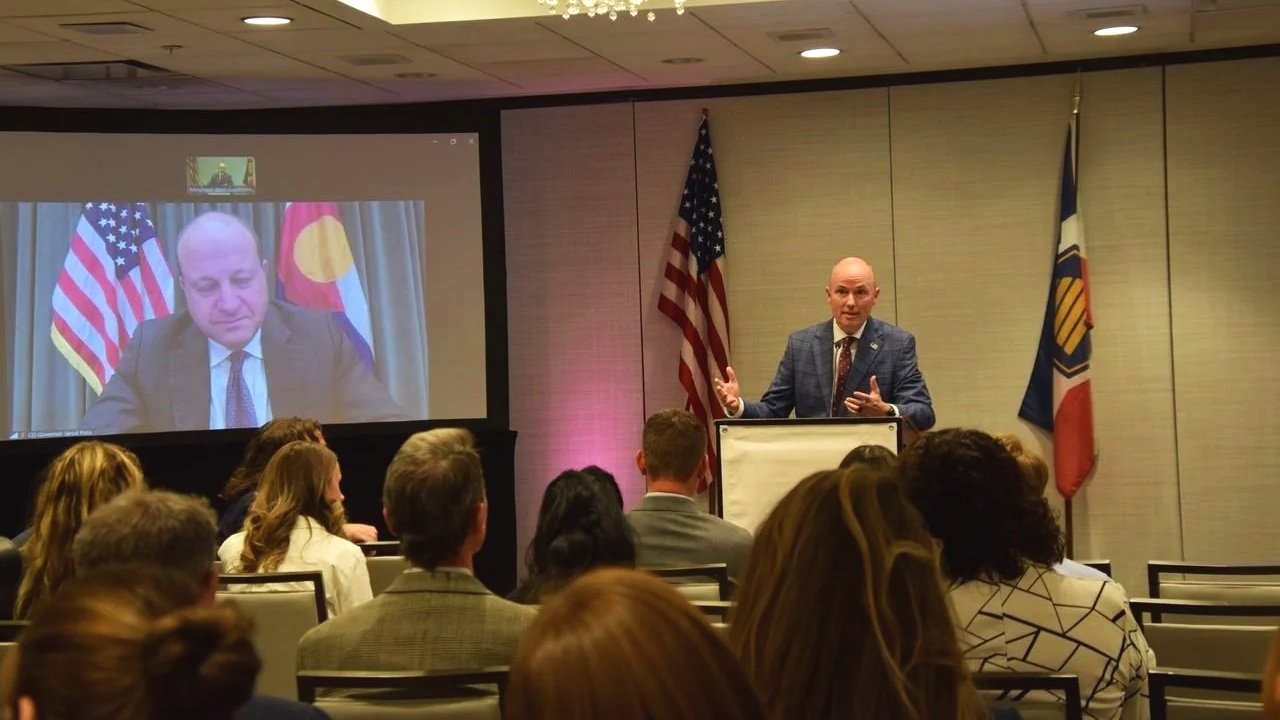
“The idea that we can unleash clean, affordable, dispatchable power – that’s the dream. That’s the holy grail.” — Governor Spencer Cox (R, UT) at the launch press conference
Geothermal energy checks all the boxes: it’s clean, we can turn it on 24/7, and it promises new opportunities for American oil & gas workers whose expertise in belowground engineering is unparalleled.
What’s more, there’s as much as 200 GW of geothermal potential in the Mountain West. For context, the entire US grid at its peak uses around 760 GW. It’s little wonder geothermal has bipartisan support at a time when energy affordability, reliability, and security are top of mind.
But despite strong consensus, geothermal is held back by financing gaps, patchy data, and procedural misalignments between the entities producing and buying geothermal energy – barriers that were identified in the DOE’s 2024 Geothermal Liftoff Report.
Center for Public Enterprise and Constructive founded the Mountain West Geothermal Consortium to convene state governments, developers, investors, utilities, and other offtakers to overcome those barriers and unlock responsible geothermal power at scale.
Last week we launched the consortium alongside Governors Spencer Cox (UT) and Jared Polis (CO) in Salt Lake City, as well as holding an all-day kickoff workshop with state energy officials from Utah, Colorado, New Mexico, and Arizona.
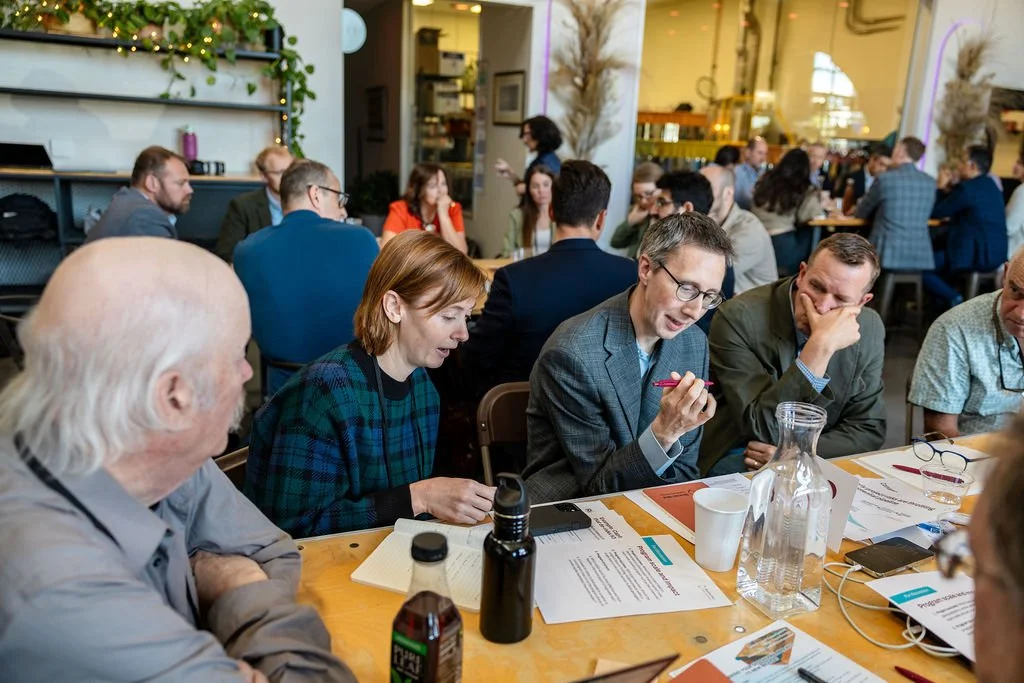
Around 80 consortium members and advisors joined our workshop to explore and stress-test potential interventions that target specific problems, such as risk-sharing finance mechanisms and state-led procurement entities.
We were also fortunate enough to visit Fervo Energy’s Cape Station projectin Milford, UT - you can read more about that visit and see some photos on Jake Wellman and Rosie Jewell’s LinkedIn posts!
Over the next six months industry stakeholders and state leaders will continue to work side-by-side with the consortium's support to design solutions that scale geothermal power. If you’re interested in getting involved or becoming an advisor, you can find out more on our website.
Meeting the Demand Surge: The inaugural WRI Polsky Energy Summit
On 21 May, Constructive partnered with the WRI Polsky Center for the Global Energy Transition to design and facilitate the inaugural WRI Polsky Energy Summit in London.
The summit convened roughly 150 senior global leaders to work on a defining question: how to meet the global surge in electricity demand with clean, affordable, and reliable energy.

The conversation was urgent. Speakers framed the current energy crisis as the largest supply disruption in history, pointing to the policy and finance bottlenecks preventing renewables from being deployed at the required pace.
Solutions groups surfaced concrete recommendations across industrial heat, clean energy finance, grid transformation, critical minerals, and data center infrastructure.
A recurring theme: "better, cheaper, faster" beats moralistic messaging. People still care about net zero, but the economic arguments are what will motivate the hard work ahead to scale clean energy.
You can watch the Fireside Chat with Dr. Fatih Birol (IEA) and Keynote Address from Chris Stark, CBE here.

Welcome to our new team members!
We’re excited to welcome two new team members to Constructive: Emma Hutchinson and Milind Singh.
Emma Hutchinson is supporting our Energy After Fire summit. An MBA candidate at London Business School focused on clean energy and private sector climate action, she previously served as communications director to John Podesta at the White House and as speechwriter to Secretary Granholm at the U.S. Dept. of Energy.
Milind Singh is supporting our UK work. He is an MSc student at Imperial College London studying climate change and finance and previously worked at a climate fund in New Delhi and as a macroeconomic consultant in Singapore.
Out and about
Mike O’Connor is speaking about geothermal atTrellis Impact (June 23-25)
Jake Wellman is attending the Atlantic Council's Global Energy Forum in DC on June 9-10th
Several of us will be at London Climate Action Week from 20-28th June
We’re holding Energy After Fire in London on June 23rd

The Mountain West Geothermal Consortium received a lot of coverage across all four states last week – below is a selection of the top stories:
Heatmap News | Exclusive: Western States Form New Bipartisan Geothermal Consortium
Deseret News | Exclusive: Mountain West states join forces to develop geothermal energy
Canary Media | Geothermal energy gets boost from new coalition of Western governors
E&E News | Western states, DOE alums launch coalition to promote geothermal energy
Utah News Dispatch | Four Mountain West states join forces to accelerate geothermal energy development
Aspen Times | Colorado governor, western leaders eye multistate plan to boost geothermal energy production

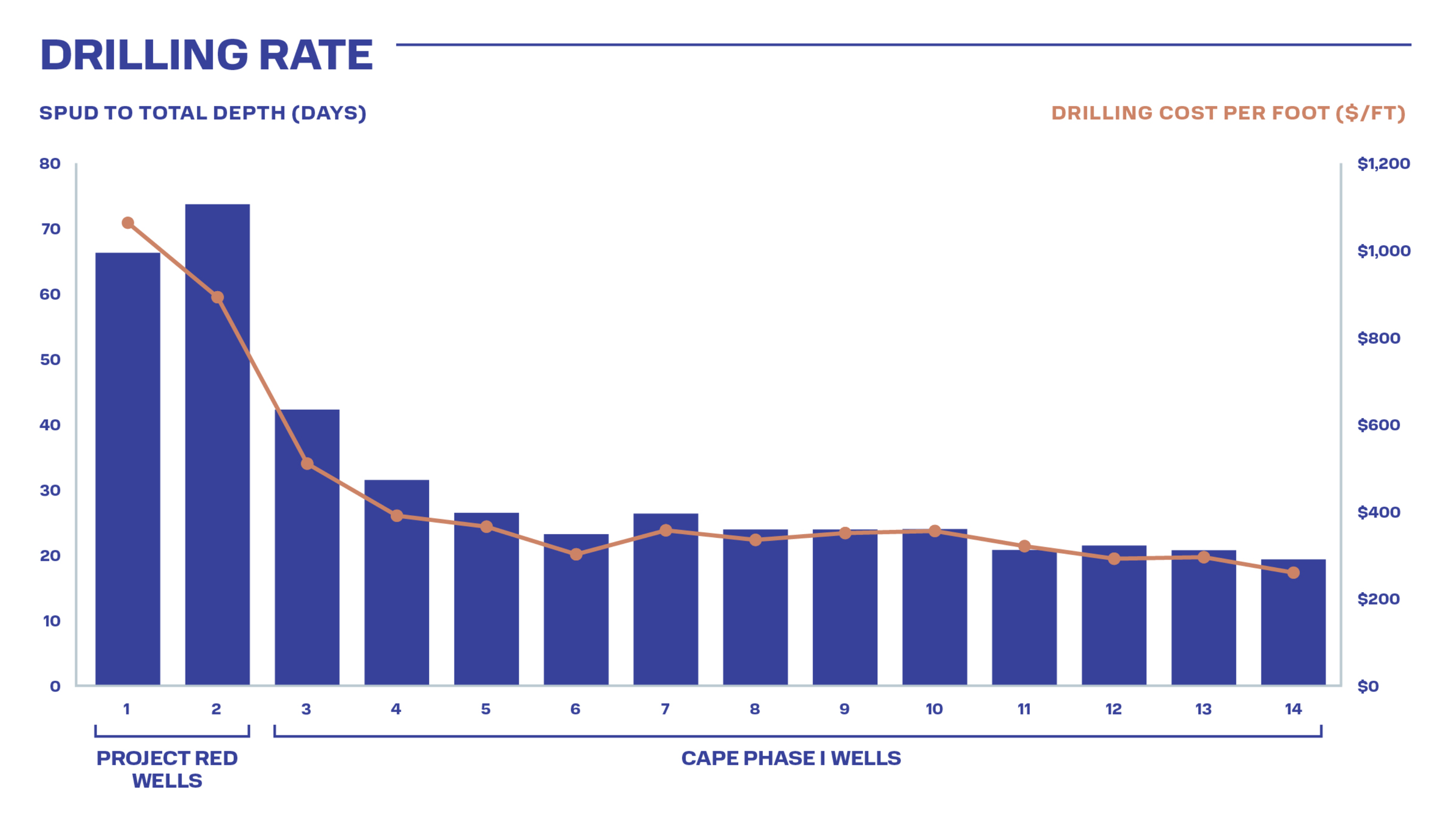
This month: Fervo is drilling deeper, faster, and cheaper than ever before. Here are two charts comparing drilling speeds and costs across wells at Project Red (Nevada) and Cape Station (Utah).
1. Drilling speeds have more than trebled over the past few years. Below, an illustration of this from Orennia with data from Akindipe and Witter, 2025. A similar chart appeared in the DOE’s Geothermal Liftoff report. A drill rig can cost as much as $150,000/day to operate, so we’re talking about a difference of several million dollars per well.
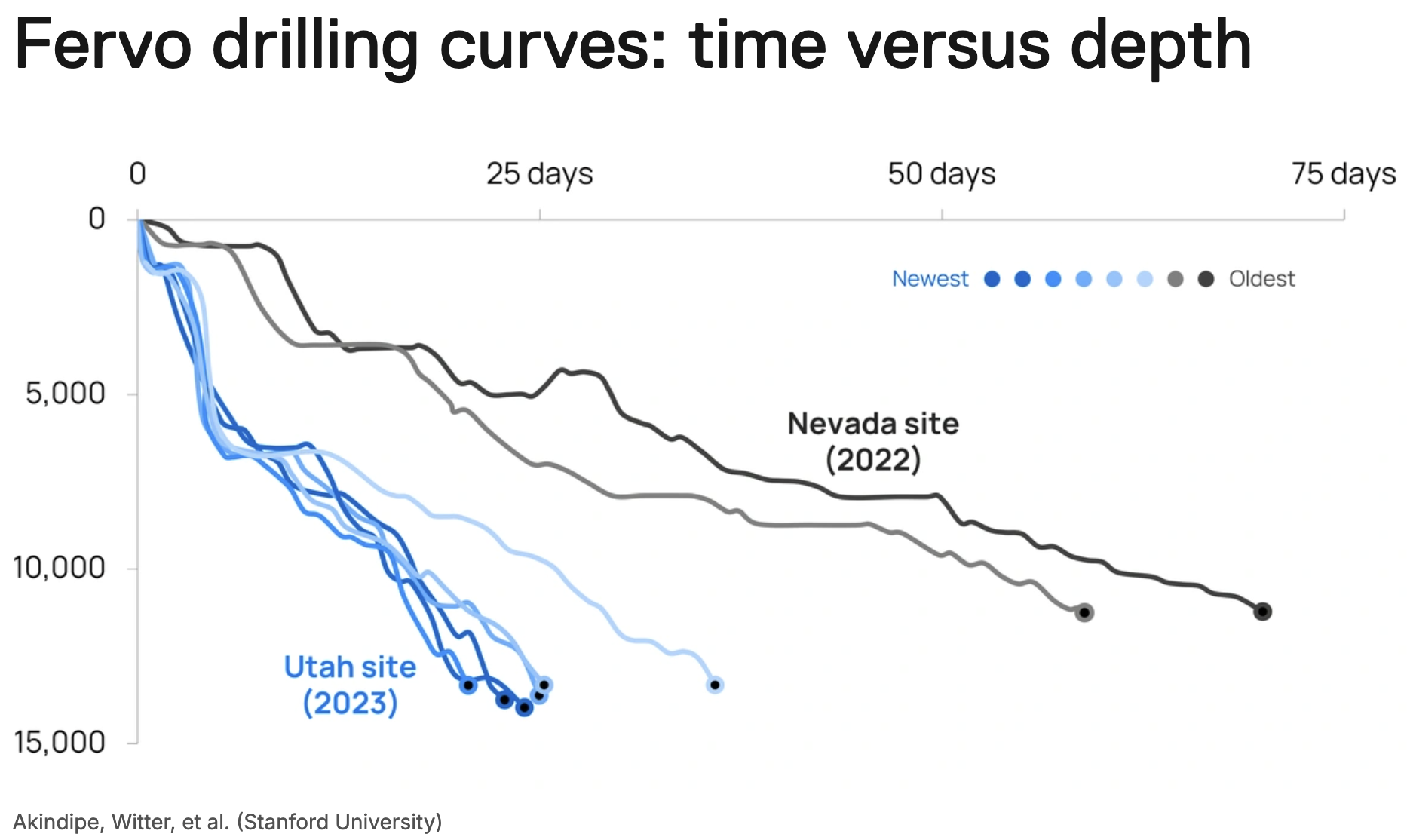
2. The cost per foot for recent wells at Cape Station is also vastly lower than the earlier wells at Project Red thanks to improvements in drilling technology. To use some common jargon, this chart is a great illustration of FOAK v. NOAK (First of a Kind v. Nth of a Kind).

Jake is diving into “Electrotech Moneyball: An Industrial Strategy for Ranking Risk and Opportunity in Energy & AI Supply Chains,” a new paper by our Energy After Fire co-organizers at the Carnegie Mellon Institute for Strategy & Technology (CMIST).
Susan is reading “How the EU Can Become Energy Independent”, an essay from Carnegie Europe urging the EU to get out of “reaction mode” and reduce its dependence on fossil fuels in order to become truly secure.
The team put together a playlist to help set the mood for Energy After Fire — best on shuffle.